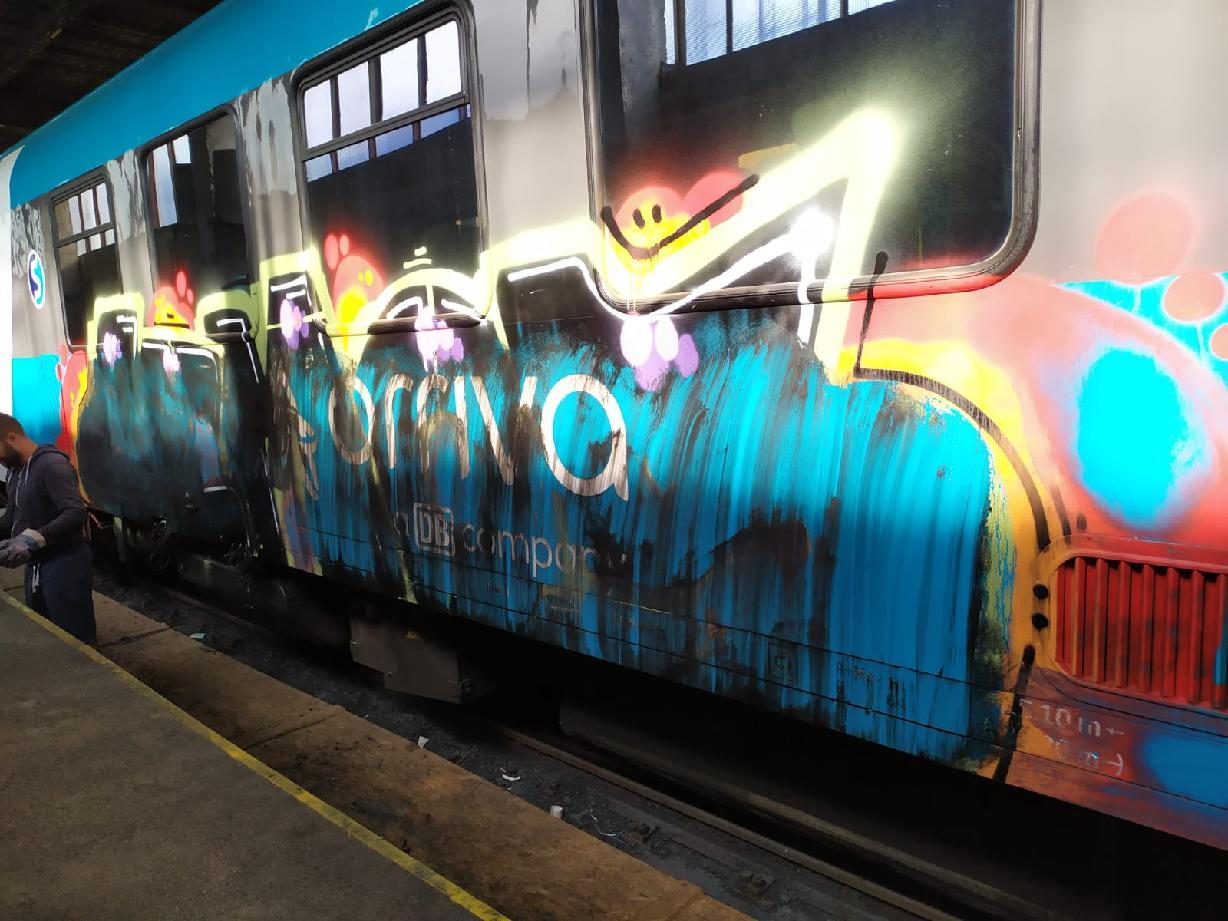
Graffiti-covered carriage before cleaning
Proven results

Case studies

Real projects, measurable outcomes — how we work and what operators can expect.

How we solve real problems for real operators

Every fleet has its own constraints — tight diagrams, limited wash-plant capacity, sites spread across a network. Here is how we've solved them. More case studies are added as projects complete.

Case study 01

Depot-based wet washing

Exterior washing at the client's own depot — with full wastewater capture and on-site treatment. No wash-plant dependency.

Read case study →
Case study 02

Exterior dry cleaning

When diagrams don't allow a trip to the washing plant, we clean the fleet dry — practically anywhere, at any time.

Read case study →
Case study 03

Daily interior cleaning

Every carriage in the fleet cleaned every day across multiple locations — from overnight turnaround cleans to full-day deep cleans.

Read case study →
Case study 04

Staff facilities & premises

Day rooms, rest rooms and dispatch offices across the network — cleaning frequency matched to how each site is used.

Read case study →
Case study 05

Same-day graffiti removal

Vandalised carriages back in traffic the same day — with containment films that let us work at any depot, siding or station.

Read case study →
Case study 01

Depot-based wet washing for Arriva

A large regional fleet, limited automated wash-plant capacity — solved by bringing the washing to the carriages, with full environmental compliance.

ClientArriva (a DB company)
FleetRegional passenger carriages
ServiceExterior wet washing on depot
Key benefitNo wash-plant dependency

The challenge

Arriva operates a large fleet, but automated washing-plant capacity across the network is scarce. Getting carriages to a wash plant means empty stock movements, lost diagram time and queuing for slots — and presentation standards still have to be met. The fleet needed regular exterior washing without depending on wash-plant availability at all.

Our approach

  1. Mobile set-up at the client's depot — our teams bring professional pressure-washing equipment directly to where the carriages are stabled, so carriages are washed on the client's own premises.
  2. Full bodyside hand wash — bodysides, fronts and running gear washed with detergents matched to the livery and substrates, at around 90 minutes per carriage, using roughly 20% of the water of an automated wash plant.
  3. Environmental containment — our own mobile wastewater treatment unit captures and treats washwater on site as we go, so nothing enters the ground or drainage — no tankering washwater away as hazardous waste, no third-party licensed-disposal step.
  4. Quality inspection — every wash is signed off against our quality checklist, with photographic records kept for the client's presentation and environmental reporting.

The result

Outcome: the fleet is washed on the client's own depot, on the client's schedule — no empty movements to a wash plant, no waiting for slots, and around 20% of the water of an automated wash, captured and treated on site by our own mobile unit.
Why the water saving matters: water is an increasingly scarce, tightly managed resource, and climate change is only adding to that pressure across the network. Using roughly a fifth of the water of an automated wash — and treating every litre on site rather than sending it away — isn't a side benefit of how we work. It's central to it.
Case study 02

Exterior dry cleaning for RegioJet

When carriages physically can't reach a washing plant between diagrams, we clean them dry — at any location, at any time of day or night.

ClientRegioJet
FleetPassenger carriages
ServiceDry exterior cleaning
Key benefitAny location, any time

The challenge

RegioJet faced the same shortage of washing-plant capacity — with an added complication: some carriages simply never get near a wash plant, because their diagrams don't allow the positioning moves. Taking a carriage out of its diagram just to wash it wasn't an option, yet exterior presentation still had to be maintained.

Our approach

  1. Dry cleaning method — specialist cleaning agents are applied and worked off by hand, using just 5% of the water of a carriage wash machine. With next to no runoff, no drainage or containment infrastructure is needed.
  2. Cleaning follows the carriages — because the method needs no fixed installation, our teams work wherever the carriages actually are: sidings, stabling points, platforms.
  3. Scheduled around operations — cleaning takes place in natural gaps in the diagram, including overnight, so no carriage is ever taken out of service to be cleaned.

The result

Outcome: the fleet is kept presentable without a single washing-plant slot. Instead of carriages travelling to the cleaning, the cleaning travels to the carriages — with complete flexibility on place and time.
Why the water saving matters: with water becoming scarcer and more tightly regulated, and climate change adding further pressure on supply, using just 5% of the water of a carriage wash machine isn't a marginal efficiency gain — it's one of the clearest ways this service model earns its keep as the pressure on water resources keeps growing.
Case study 03

Daily interior cleaning across the Die Länderbahn fleet

Every carriage, every day, across multiple locations — a tiered cleaning regime from overnight turnaround cleans to full-day deep cleans.

ClientDie Länderbahn
ScopeEntire fleet, multiple locations
ServiceInterior cleaning
FrequencyDaily + scheduled deep cleans

The challenge

Die Länderbahn needed every carriage to enter service each morning clean — but the fleet stables overnight at different sites across the network, and different levels of cleaning are needed at different intervals. A single fixed cleaning location was never going to work.

Our approach

  1. Mobile teams in every location — cleaning crews are based where the carriages actually stable overnight, in each of the cities on the network.
  2. Daily turnaround clean — carried out at night while carriages are stabled: litter, floors, touchpoints, toilets and driver's cabs, so every carriage starts the day ready for passengers.
  3. Tiered cleaning levels — the daily clean is backed by a schedule of progressively deeper cleans at set intervals.
  4. General deep clean — the carriage is booked out of service for a full day and cleaned top to bottom: machine cleaning of seats and upholstery, deep floor scrubbing, panels, vents and vestibules, plus odour neutralisation using our ozone treatment, with microbial testing to verify results.
  5. Quality control — every clean is signed off against a checklist, so the standard is consistent across all locations and shifts.

The result

Outcome: the entire fleet is presented clean to passengers every single day, in every location — while deep cleans are planned around the operation so availability is never compromised.
Case study 04

Staff facilities and premises cleaning for Die Länderbahn

Beyond the fleet: day rooms, rest rooms and dispatch offices across the network, with cleaning frequency matched to how busy each site is.

ClientDie Länderbahn
ScopeStaff areas across the network
ServiceStation & premises cleaning
FrequencyMatched to site utilisation

The challenge

Rolling stock isn't the whole picture. Train crews and dispatchers rely on day rooms, rest rooms and offices spread across many locations — some in constant use, others only lightly used. The client wanted one supplier to keep all of them to a consistent standard, without paying for cleaning that isn't needed.

Our approach

  1. Site-by-site assessment — each location's utilisation is reviewed to set the right cleaning frequency, from daily to weekly.
  2. Staff day and rest rooms — regular cleaning of crew rooms, kitchens and sanitary facilities, scheduled around shift patterns so rooms are ready when crews arrive.
  3. Dispatch offices — control and dispatch rooms cleaned without disrupting operations that run around the clock.
  4. One supplier, one standard — the same quality system used on the fleet applies to the premises, with a single point of contact.

The result

Outcome: fleet and premises covered by a single partner, with frequencies tuned to each site — consistent standards for staff everywhere, and no over-servicing of quiet locations.
Case study 05

Same-day graffiti removal for Arriva

Regional passenger carriages vandalised with extensive spray-paint graffiti across bodysides and windows — returned to service without livery damage.

ClientArriva (a DB company)
FleetRegional passenger carriages
ServiceExterior graffiti removal
TurnaroundSame day

The challenge

Tagged carriages mean lost presentation scores, unhappy passengers and — if left — paint bonding permanently to vinyls and window films. The carriages needed to be back in traffic for the next diagram, ruling out days out of service. Overnight temperatures near 0 °C ruled out many standard chemical processes.
Our approach

  1. Assessment on arrival — paint type, affected substrates (painted panels, vinyls, glass, rubber seals) and livery condition documented before starting.
  2. Containment set-up — protective capture films are laid beneath the work area so all runoff is contained. This is what lets us remove graffiti practically anywhere, at any time — no dedicated wash road needed.
  3. Specialist chemical application — graffiti removers matched to each substrate, effective even near 0 °C, applied without damaging the livery underneath.
  4. Controlled removal and rinse — dwell, agitate and rinse cycles repeated until all trace and ghosting removed, including shadowing on window films.
  5. Full exterior wash — hand wash of the treated carriage so cleaned areas match the rest of the bodyside.
  6. Anti-graffiti film option — for recurring hotspots, we also supply and fit anti-graffiti film, cutting removal time and cost on the next incident.
  7. Quality inspection — sign-off against our quality checklist with photographic record for the client.

The result

Carriage before — extensive graffiti
Before
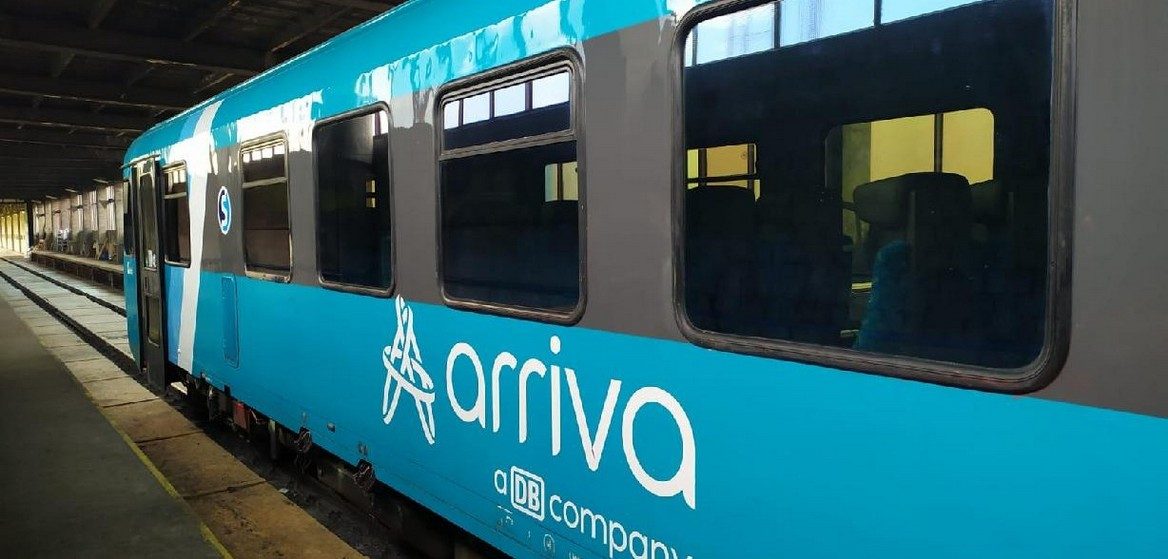
Carriage after — clean livery restored
After
Outcome: full graffiti removal with no livery damage, carriages returned to service the same day. Because it needs no fixed wash road, this is now our standard approach for every client — at any depot, siding or station, at any time.
Comprehensive cleaning of rail vehicles, graffiti removal and exterior washing with 24/7 support. Special requests are handled efficiently, even outside normal hours.
24/7 Nationwide

Have a similar problem on your fleet?

Talk to us — flexible cleaning solutions wherever your fleet is, 24/7.

Contact us